了解英國天氣警報系統
Understanding UK Weather Alert System
📌 天氣警報系統資料來自 Met Office 及 GOV.UK
📌 Weather alert system information sourced from the Met Office and GOV.UK
英國氣象局(Met Office)發出三級天氣警報,了解各級意思有助提前做好準備。
The UK Met Office issues three levels of weather warnings. Understanding each level helps you prepare in advance.
天氣可能造成部分交通延誤及日常生活不便。留意最新消息,按情況調整計劃。
Weather may cause some travel disruption and inconvenience. Monitor updates and consider adjusting plans.
可能造成嚴重交通混亂及基礎設施損壞。建議非必要不外出,補充家中物資。
Likely to cause severe travel disruption and infrastructure damage. Avoid unnecessary travel and stock up on supplies.
極端天氣可能危及生命。除非緊急情況,否則留在室內,跟從當地當局指示。
Extreme weather poses a danger to life. Stay indoors unless there's an emergency and follow local authority guidance.
在 metoffice.gov.uk 免費登記你的地區,收到天氣警報即時電郵及手機通知。
Register your area for free at metoffice.gov.uk to receive immediate email and app notifications of weather warnings.
冬季前:家居準備清單
Before Winter: Home Preparation Checklist
📌 家居冬季準備建議整理自 RAC 及 GOV.UK 冬季居家指引
📌 Home preparation guidance sourced from the RAC and GOV.UK winter home guides
🏠 室內準備Indoor Prep
- 檢查暖氣系統,年度維修鍋爐(Gas Safe工程師)
- Check heating, annual boiler service (Gas Safe engineer)
- 了解水管閥門位置(出現爆管可即時關閉)
- Know your stopcock location (turn off in a burst pipe emergency)
- 購買家居保險並確認涵蓋冬季損壞
- Ensure home insurance covers winter damage
- 為門窗加裝密封條防風
- Draught-proof doors and windows
- 確保閣樓有足夠隔熱材料
- Ensure adequate loft insulation
- 安裝並測試一氧化碳警報器
- Install and test CO alarm
📦 冬季備品Winter Supplies
- 儲備7日份量的食物及樽裝水
- 7-day supply of food and bottled water
- 足夠保暖衣物及毛毯(備停電無暖氣情況)
- Warm clothing and blankets for no-heat scenario
- 手電筒、行動電源及電池式收音機
- Torch, power bank and battery radio
- 現金(停電時電子付款可能失效)
- Cash (card payments may fail in a power cut)
- 雪鏟(有車或有門前小路)
- Snow shovel (if you have a car or front path)
- 防滑鹽(門前台階防冰)
- Rock salt for icy steps and paths
防止水管爆裂(英國冬天常見問題)
Preventing Burst Pipes (Common UK Winter Problem)
📌 水管防凍建議整理自 British Gas 及 Homeserve 指引
📌 Pipe freeze prevention guidance sourced from British Gas and Homeserve
英國老舊房屋的水管特別容易在嚴寒天氣下爆裂,處理費用動輒數千英鎊,及早預防最重要。
UK older housing stock is particularly susceptible to burst pipes in freezing weather — repairs can be very expensive, especially if water damages floors, walls and belongings. Prevention is far cheaper.
- 找出閥門(Stopcock)位置:通常在廚房地下或廁所廁缸下方,出現爆管時可即時關閉整屋供水
- Locate your stopcock: Usually under the kitchen sink or bathroom floor, turn it off immediately if a pipe bursts
- 長期離家須知:冬天離家超過24小時,一個常見建議是將暖氣設至低溫(約15°C)持續運作,而非完全關掉,但實際做法視乎你家保溫情況、供暖系統及能源預算
- If leaving for more than 24 hours: A common UK recommendation is to keep heating on low (around 15°C) rather than off completely in winter, but this depends on your home, heating system and budget
- 為外露水管加隔熱套管:DIY商店(如Screwfix)有售泡沫管套,成本約£5-10,可大幅降低爆管風險
- Insulate exposed pipes: Foam pipe lagging from DIY stores (Screwfix etc.) costs £5-10 and significantly reduces burst pipe risk
即時關閉閥門 → 開盡所有水龍頭排走積水 → 若涉及電器,切斷電源 → 聯絡緊急喉管服務(水務公司或私人緊急維修)。
Turn off the stopcock immediately → Open all taps to drain remaining water → Switch off electricity if water is near electrics → Contact emergency plumbing (your water company or a private emergency plumber).
停暖氣時如何保暖
Staying Warm Without Heating
📌 保暖建議整理自 GOV.UK 及 Age UK 冬季居家指引
📌 Warmth guidance sourced from GOV.UK and Age UK winter home advice
目標不是把整間房子重新暖起來,而是集中保住家人的身體熱量。選一間較小、門窗較少漏風的房間作主要活動及休息空間;關上不用房間的門、拉好窗簾,並穿上乾爽衣物。若有人感到不適、體溫持續下降,或家中有嬰幼兒、長者、心肺疾病患者,應及早向親友、當地支援服務或醫療服務求助。
The aim is not to reheat the whole house, but to hold on to your family’s body heat. Use one smaller, less draughty room as the main living and rest space; close unused rooms, draw curtains and keep clothing dry. Seek help early if someone becomes unwell or colder, or if the household includes babies, older people or anyone with heart or lung conditions.
- 集中在一個較小的房間:關上不用房間,減少穿堂風;不要嘗試用危險裝置為整屋供暖。
- Use one smaller room: Close unused rooms and reduce draughts; do not try to heat the whole home with unsafe equipment.
- 多層穿著:薄衣多層比厚衣一件更保暖;緊身底衣(thermal base layer)特別有效
- Layer clothing: Multiple thin layers trap more warmth than one thick layer; thermal base layers are especially effective
- 先用普通寢具,再用保溫用品:睡袋、厚被、毛毯和乾爽衣物是主力;緊急鋁箔毯/thermal bivvy 用於減少散熱,不會自行產生熱力。
- Use normal bedding first, then thermal items: Sleeping bags, duvets, blankets and dry clothing are the mainstay. Foil blankets and thermal bivvies reduce heat loss; they do not create heat.
- 保護頭部和手腳:大量熱量從頭部及手腳散失,帽子及手套在室內同樣重要
- Protect head and extremities: Significant heat is lost through the head and feet — hats and gloves matter even indoors
🧤 可預先放入家中的冬季停電保暖用品Winter power-cut warmth supplies to keep at home
以下是補充用品,不取代厚衣、毛毯與睡袋。每件用品均應按製造商說明使用,並先為每位家庭成員準備合適尺碼的衣物和寢具。
These are additions, not substitutes for warm layers, blankets and sleeping bags. Follow the maker’s instructions and first make sure everyone has suitable clothing and bedding.
- 一次性暖包:未開封存放,用於暖手、暖腳或身體局部保暖;只按包裝指示使用,不要直接長時間貼在皮膚上、不要在睡覺時使用,也不要讓嬰幼兒自行使用。
- Disposable heat packs: Store unopened for hands, feet or local warmth. Follow the label; do not keep one directly on skin for long periods, use one while sleeping, or leave babies and young children to use one unsupervised.
- 可充電暖手器:日常亦可使用,停電初段可提供局部舒適;但電量耗盡後不能繼續供暖,因此只屬補充,不是三日保暖的主力。
- Rechargeable hand warmers: Useful day to day and for local comfort early in an outage. Once the battery is empty they cannot provide more heat, so they are a supplement rather than a three-day solution.
- 地面隔熱:坐下或睡覺時,在身下墊毛毯、睡墊或厚衣物,避免身體直接接觸冰冷地面。
- Ground insulation: Put blankets, a sleeping mat or thick clothing beneath you when sitting or sleeping, rather than directly on a cold floor.
不可在室內、車房、帳篷或其他密閉空間使用炭爐、BBQ、戶外露營爐或發電機取暖。一氧化碳警報器不能令這些做法變得安全。若停電,請先撥打105查詢及報告;如聞到煤氣味或懷疑煤氣洩漏,離開現場後撥打 Gas Emergency 0800 111 999。
Never use charcoal burners, barbecues, outdoor camping stoves or generators for heat in a home, garage, tent or other enclosed space. A CO alarm does not make this safe. For a power cut, call 105; if you smell gas or suspect a gas leak, leave the area and call Gas Emergency on 0800 111 999.
🧤 不知該補哪一樣?先找出家中的保暖缺口Not sure what to add? Find your warmth gap first
若每人已有足夠厚被、毛毯和乾爽衣物,未必需要再買睡袋;想用最低成本補一個缺口,可先考慮一次性暖包;如希望買一件平日外出也用得到的用品,才考慮可充電暖手器。SafeNest 在72小時清單內整理了兩者的用途、限制和選購方向。
If everyone already has warm bedding, blankets and dry layers, you may not need another sleeping bag. Disposable heat packs are the simplest low-cost gap-filler; consider a rechargeable hand warmer only if you would also use it day to day. SafeNest explains both options, their limits and how to choose in the 72-hour kit.
保暖及減少穿堂風:UKHSA/GOV.UK《Keeping warm and well》;冬季天氣準備:GOV.UK Prepare《Cold weather, snow and ice》;停電安排及105:GOV.UK Prepare《Power cuts》;一氧化碳風險:UKHSA《Carbon monoxide》。
Keeping warm and reducing draughts: UKHSA/GOV.UK, Keeping warm and well; winter-weather preparation: GOV.UK Prepare, Cold weather, snow and ice; power cuts and 105: GOV.UK Prepare, Power cuts; carbon-monoxide risk: UKHSA, Carbon monoxide.
如果不能留在家中:冬季撤離、車內受困或戶外等候怎樣做?
If you cannot stay at home: winter evacuation, a stranded car and waiting outside
這一節不是教人露營捱寒夜。它的目的,是讓你在要離家、等候支援或被困路上時,減慢失溫、保持可行動,盡快到正式避難中心、室內或其他安全地點。如官方叫你撤離,先走;不要因為還想多收拾或買用品而拖延。
This section is not about camping through a cold night. It helps you slow heat loss, stay able to move and reach an official rest centre, indoors or another safe place if you must leave home, wait for help or become stranded. If officials tell you to evacuate, leave first — do not delay to pack more or buy equipment.
暖包只暖一小處;風、雨、濕衣和冷地面卻會不斷帶走全身熱量。因此先處理環境和衣物,效果遠大於先找一件「很熱」的東西。
A heat pack warms one small area; wind, rain, wet clothing and cold ground remove heat from the whole body. Fix the environment and clothing first — it matters far more than finding something very hot.
仍有幾分鐘可以收拾時:照這五步做
If you still have a few minutes: follow these five steps
先聽官方,再決定去哪裡
Check official advice first
看緊急短訊、當地 council、Met Office 或水災指示;知道集合點便直接去。不要自行走近水邊、橋底、倒樹或封路位置。
Check emergency messages, your council, Met Office or flood advice; go straight to the stated location. Do not improvise near floodwater, bridges, fallen trees or closed roads.
穿上「乾的一套」
Put on one dry set
由皮膚開始:底衫褲、厚襪、帽、頸套、手套;外面加防水防風層。若只帶一套替換衣物,請用密封袋保留它乾爽,作休息或睡覺時使用。
Start at the skin: base layer, warm socks, hat, neck cover and gloves, then a waterproof windproof layer. Keep one spare set sealed and dry for resting or sleeping.
把「坐/睡」用品獨立拿出
Separate your sit-and-sleep items
不要將所有東西塞在大袋底:泡棉睡墊、睡袋或毛毯、bivvy bag/保暖毯要一拿到就用。它們不是多帶一件,而是防止地面和風把熱量抽走。
Do not bury everything in the bottom of one bag: keep a foam mat, sleeping bag or blanket, and bivvy/thermal cover ready to use. They stop the ground and wind taking heat away.
藥物、眼鏡、聯絡資料放防水袋
Keep essentials dry and reachable
常用藥、眼鏡、充電線、紙本聯絡資料、身份/保險副本放進防水袋,放背囊最上層。這些小物失去後,通常比少一件衣物更難即時補回。
Put regular medicines, glasses, charging lead, paper contacts and ID/insurance copies in a waterproof pouch at the top of the bag. They are often harder to replace quickly than one item of clothing.
車上留一個全家共用保暖袋
Keep one shared warmth bag in the car
不必每次重新執:放毛毯或睡袋、泡棉墊、乾襪手套、頭燈、零食、水和充電線。冬天出發前才檢查有沒有帶走或受潮。
Do not repack every journey: keep a blanket or sleeping bag, foam mat, dry socks and gloves, head torch, food, water and cable together. Check before winter journeys that nothing has been removed or become damp.
已在車內或戶外等候:由現在開始怎樣做
Already waiting in a car or outdoors: what to do now
- 先找安全遮蔽,並離開冷地面:避開風口、積水、交通和倒塌風險;坐下前先鋪閉孔泡棉墊。沒有睡墊,先用背囊、摺好的外套或乾衣物墊在身下。
- Find safe shelter and get off the cold ground: avoid wind, floodwater, traffic and falling hazards. Put a closed-cell foam mat down before sitting. If you have none, use a backpack, folded coat or dry clothing underneath you.
- 濕了就盡快換:尤其襪、手套、底層和鞋內。把濕物跟乾物分開,不要再把濕衣塞回睡袋。若無法完全更換,至少先加外層擋風雨,並保住頭、頸和軀幹。
- Change damp items as soon as you can: especially socks, gloves, base layers and anything inside footwear. Keep wet and dry items apart; do not put wet clothing back into a sleeping bag. If you cannot fully change, block wind and rain first and cover head, neck and torso.
- 先包住核心,才暖手腳:先入睡袋或用毛毯包軀幹,加上防風防水 bivvy 外層;然後才按包裝指示把暖包放在衣物外層口袋、襪面或睡袋腳位。不要直接貼皮膚,也不要睡覺時使用。
- Wrap the core before warming hands and feet: get into a sleeping bag or wrap the torso in a blanket, with a windproof waterproof bivvy outer layer; only then use heat packs as directed in an outer pocket, over socks or at the foot of the sleeping bag. Never directly on skin or while asleep.
- 活動到微暖便停:走幾步或輕鬆活動可減少寒意,但不要做到出汗;停下時汗濕衣物反而會更冷。
- Move only until slightly warm: a short gentle walk can help, but stop before sweating. Damp clothing will make you colder once you rest.
- 人清醒、能安全吞嚥才補給:少量高熱量食物和暖的無酒精飲品可幫忙;不要給酒精。
- Offer food and drink only if the person is alert and swallowing safely: small high-calorie foods and warm non-alcoholic drinks can help; do not use alcohol.
不是「買得越多越好」:先補你真正的缺口
Not “buy more”: fill the gap you actually have
| 你面對的問題 | The problem | 先做甚麼 | Do this first | 合適的補充用品 | Useful addition |
|---|---|---|---|---|---|
| 一坐下就凍 | Cold as soon as you sit | 身下加一層乾爽隔熱物 | Put dry insulation underneath | 閉孔泡棉睡墊/坐墊 | Closed-cell foam mat / sit pad |
| 有風、有雨,衣物容易濕 | Wind, rain and damp clothing | 先擋風雨、保留一套乾衣 | Block wind and rain; save dry clothing | 有帽防水外層、重用式 bivvy bag、防水袋 | Hooded waterproof shell, reusable bivvy, dry bag |
| 整個人開始發冷 | Your whole body is cooling | 先包軀幹和頭部 | Wrap torso and head first | 適合低溫的睡袋、毛毯、帽、厚襪 | Low-temperature sleeping bag, blanket, hat, warm socks |
| 手腳冰冷但已有足夠保暖層 | Cold hands/feet despite good layers | 按說明作局部補充 | Use local warmth as directed | 一次性暖包;可充電暖手器只作短期補充 | Disposable heat packs; rechargeable warmer only as short-term support |
| 天黑、要找人或找物件 | Darkness and finding people/items | 保持雙手可用和容易被找到 | Keep hands free and be locatable | 頭燈、後備電池、哨子 | Head torch, spare batteries, whistle |
閉孔泡棉睡墊Foam sleeping mats重用式 bivvy bagReusable bivvy bags冬季/三季睡袋Winter / 3-season sleeping bags防水乾袋Waterproof dry bags
持續發抖、講話含糊、混亂、反常嗜睡、呼吸變慢,或皮膚/嘴唇變藍灰,都不是「休息一下就好」。盡快移到有遮蔽或室內、除去濕衣、用乾毛毯/睡袋包住身體和頭部;若失去意識、明顯混亂或呼吸異常,立即打 999。不要用熱水浴、熱水袋、熱燈或按摩手腳猛熱,也不要給酒精。
Continuous shivering, slurred speech, confusion, unusual sleepiness, slow breathing, or blue-grey skin/lips are not something to “sleep off”. Move the person to shelter or indoors, remove wet clothing and wrap body and head with dry blankets/sleeping bag; call 999 immediately for unconsciousness, marked confusion or abnormal breathing. Do not rapidly heat with a hot bath, hot-water bottle or heat lamp, and do not massage limbs or give alcohol.
不要在這些地方用炭、BBQ、露營爐、煤油暖爐或發電機取暖/煮食;也不要把車的引擎當作整晚暖爐。一氧化碳沒有氣味,CO 警報器不能令上述做法安全。
Do not use charcoal, barbecues, camping stoves, paraffin heaters or generators for heat/cooking in these places, and do not treat a car engine as an overnight heater. Carbon monoxide has no smell; a CO alarm does not make these activities safe.
撤離與水災前準備:GOV.UK《Prepare for flooding》;冬季天氣與車內用品:GOV.UK Prepare《Cold weather, snow and ice》;低溫症徵狀及急救:NHS《Hypothermia》。
Evacuation and flood preparation: GOV.UK, Prepare for flooding; winter weather and car supplies: GOV.UK Prepare, Cold weather, snow and ice; hypothermia signs and first aid: NHS, Hypothermia.
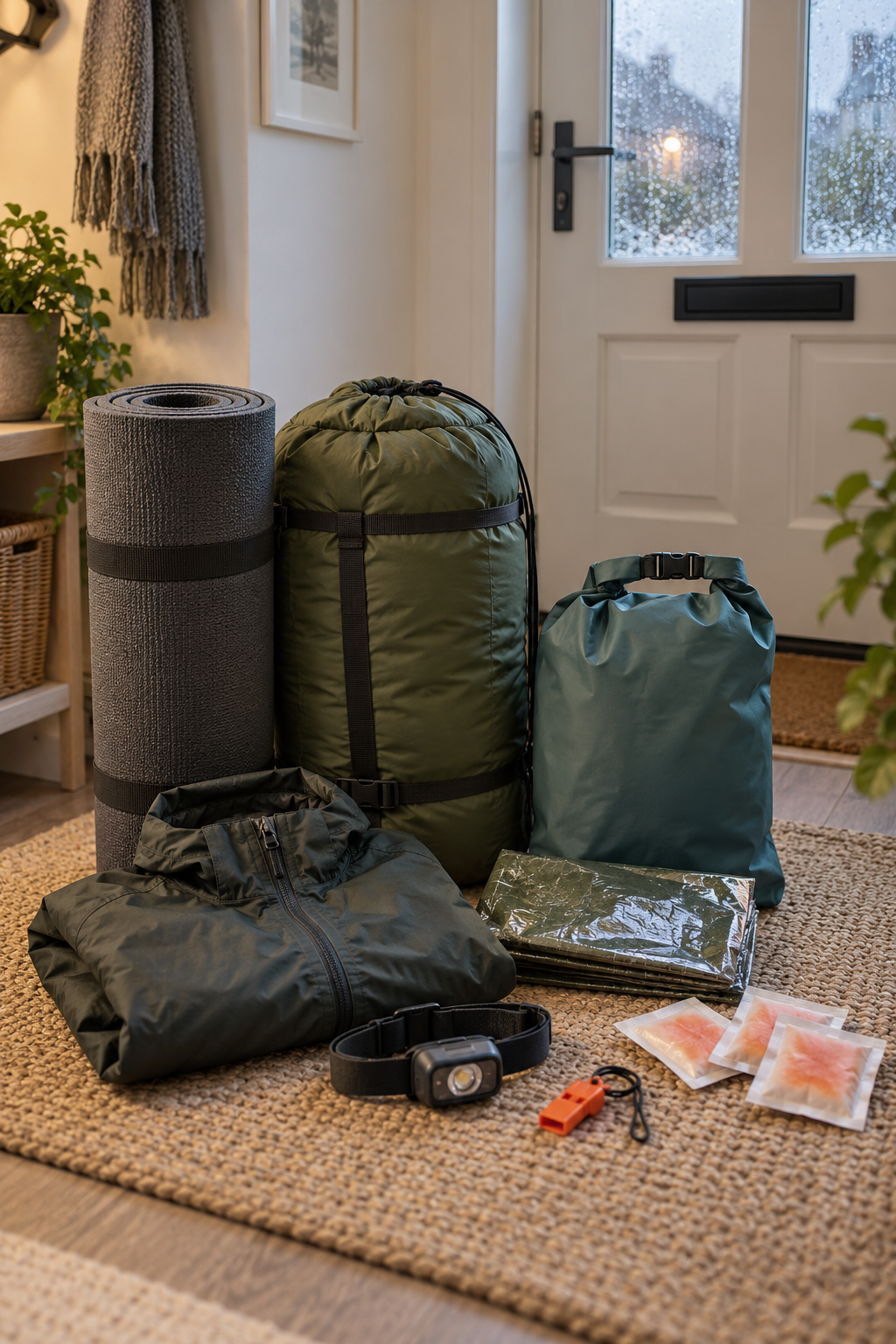
不能留在家中時:先處理這四個保暖缺口
If you cannot stay home: cover these four warmth gaps first
要撤離、車內等候或在安全地方等支援時,裝備的作用是幫你撐到室內、避難中心或救援到達,不是讓人長時間在戶外過夜。先避風雨、再離地、換乾、包住軀幹,暖包只是最後補手腳。
If you must evacuate, wait in a car or wait safely for help, equipment is there to bridge the time until you reach indoors, a rest centre or rescue — not to make a long outdoor night safe. Block wind and wet, get off the ground, get dry, wrap the torso; heat packs come last.
冷地面:閉孔泡棉睡墊Cold ground: foam mat
一坐或一睡便覺得冷,先在身下加泡棉墊;沒有時先用背囊、摺好外套或乾衣物。這比多一個暖包更直接阻止地面抽走熱量。
If you get cold as soon as you sit or lie down, put a foam mat beneath you. With none, use a backpack, folded coat or dry clothing. It stops ground heat-loss more directly than another heat pack.
風雨濕身:防水外層+bivvyWind and rain: shell + bivvy
先加有帽防水外層,並把一套乾衣密封保存;停下休息時,bivvy 可包在睡袋外面擋風雨。它不會發熱,卻能把暖氣留住。
Put on a hooded waterproof layer first and keep one dry outfit sealed. When resting, a bivvy goes outside the sleeping bag to block wind and rain. It does not make heat, but keeps heat in.
整個人發冷:睡袋/毛毯Whole-body cooling: sleeping bag / blanket
先包住軀幹和頭部,再處理手腳。睡袋看 comfort rating,不要只看「extreme」;帽、頸套和乾襪是小而有效的補充。
Wrap the torso and head before worrying about hands and feet. Choose a sleeping bag by comfort rating, not just “extreme”; a hat, neck cover and dry socks are small but effective additions.
手腳冰冷:一次性暖包Cold hands and feet: heat packs
已有足夠衣物和寢具才用作局部舒適:依包裝指示放口袋、襪面或睡袋腳位;不可長時間直接貼皮膚、不可睡覺時用。
Use only after clothing and bedding are covered, for local comfort: follow the label in a pocket, over socks or at the foot of a sleeping bag; never directly on skin for long periods or while asleep.
已在外面/車內等候時:照着做
Already waiting outside or in a car: follow this order
- 離開風口、積水、交通及倒塌風險,先墊地。
- Move away from wind, water, traffic and falling hazards; put insulation underneath you.
- 把濕襪、手套、底層換走;不能全換也先擋風雨。
- Replace wet socks, gloves and base layer; if you cannot, block wind and rain first.
- 睡袋/毛毯先包核心,再加 bivvy;最後才按說明用暖包。
- Wrap the core in sleeping bag/blanket, add bivvy, and only then use heat packs as directed.
- 輕微活動到暖便停,別出汗;人清醒、可吞嚥才食少量高熱量食物和飲暖的無酒精飲品。
- Move gently only until warm — do not sweat. Give small high-calorie food and warm non-alcoholic drink only when the person is alert and swallowing safely.
閉孔泡棉睡墊Foam sleeping mats重用式 bivvy bagReusable bivvy bags冬季/三季睡袋Winter / 3-season sleeping bags防水乾袋Waterproof dry bags
持續發抖、講話含糊、混亂、反常嗜睡、呼吸變慢,或皮膚/嘴唇變藍灰,盡快移到有遮蔽或室內、除去濕衣、用乾毛毯/睡袋包住身體和頭部;失去意識、明顯混亂或呼吸異常,立即打 999。不要熱水浴、熱水袋、熱燈、按摩手腳或給酒精。
Continuous shivering, slurred speech, confusion, unusual sleepiness, slow breathing or blue-grey skin/lips: move to shelter/indoors, remove wet clothing and wrap body and head in dry blankets/sleeping bag. Call 999 for unconsciousness, marked confusion or abnormal breathing. No hot bath, hot-water bottle, heat lamp, limb massage or alcohol.
帳篷、車內、車房或封閉空間內,不要用炭、BBQ、露營爐、煤油暖爐或發電機取暖/煮食;也不要把車引擎當作整晚暖爐。
Never use charcoal, BBQs, camping stoves, paraffin heaters or generators for heat/cooking in a tent, car, garage or enclosed space, and do not treat a car engine as an overnight heater.
🚗 冬季行車準備
🚗 Winter Driving Preparation
📌 冬季駕駛準備建議整理自 RAC 及 RoSPA
📌 Winter driving preparation sourced from the RAC and RoSPA
✅ 出發前檢查
✅ Before You Drive
- 完全清除車身積雪及霜(包括車頂)
- Fully clear snow and ice (including roof)
- 檢查輪胎花紋深度(最少1.6mm,冬天建議3mm)
- Check tyre tread (min 1.6mm, 3mm for winter)
- 確保擋風玻璃水有防凍效果
- Ensure antifreeze in windscreen fluid
- 車內備有鏟雪器及冰霜噴霧
- Keep ice scraper and de-icer in the car
🎒 車內緊急備品
🎒 Car Emergency Kit
- 毛毯及保暖衣物
- Blanket and warm clothing
- 手電筒及電池
- Torch and batteries
- 高能量零食及樽裝水
- High-energy snacks and water
- 充電器及行動電源
- Charger and power bank
- 急救箱及反光三角警示牌
- First aid kit and warning triangle
留在車內等候救援(車比外面安全及溫暖)→ 確保排氣管無被雪堵塞(一氧化碳風險)→ 每小時開動引擎10分鐘取暖 → 開啟危險燈號 → 優先致電道路救援;如有即時危險才致電999(AA/RAC)。
Stay in your car (safer and warmer than outside) → Check exhaust pipe is not blocked by snow (CO risk) → Run engine 10 min per hour for warmth → Turn on hazard lights → Call 999 or breakdown cover (AA/RAC).